Why This Matters to Homeowners
A main sewer line backup is one of the most destructive and unsanitary disasters a homeowner can face.
When the main line that connects your home to the municipal sewer system becomes completely blocked, all the wastewater you generate has nowhere to go.
It will inevitably reverse course, backing up through the lowest drains in your home—usually ground-floor bathtubs, showers, and toilets.
This results in raw sewage flooding your living spaces, causing thousands of dollars in severe water damage, destroying flooring and drywall, and creating a massive biohazard that requires professional remediation.
Preventing these blockages is vastly cheaper and less stressful than dealing with the aftermath.
The Threat of Tree Roots in Solano County
In Fairfield and throughout Solano County, tree root intrusion is the leading cause of main sewer line failure, particularly in older neighborhoods. Many homes built before the 1980s utilize clay or cast-iron sewer pipes.
Over decades, the ground shifts, causing microscopic cracks or slight separations at the pipe joints.
During California's long, dry summers, large trees and mature shrubs aggressively seek out underground moisture and nutrients. They are naturally drawn to the warm, nutrient-rich water flowing through your sewer line.
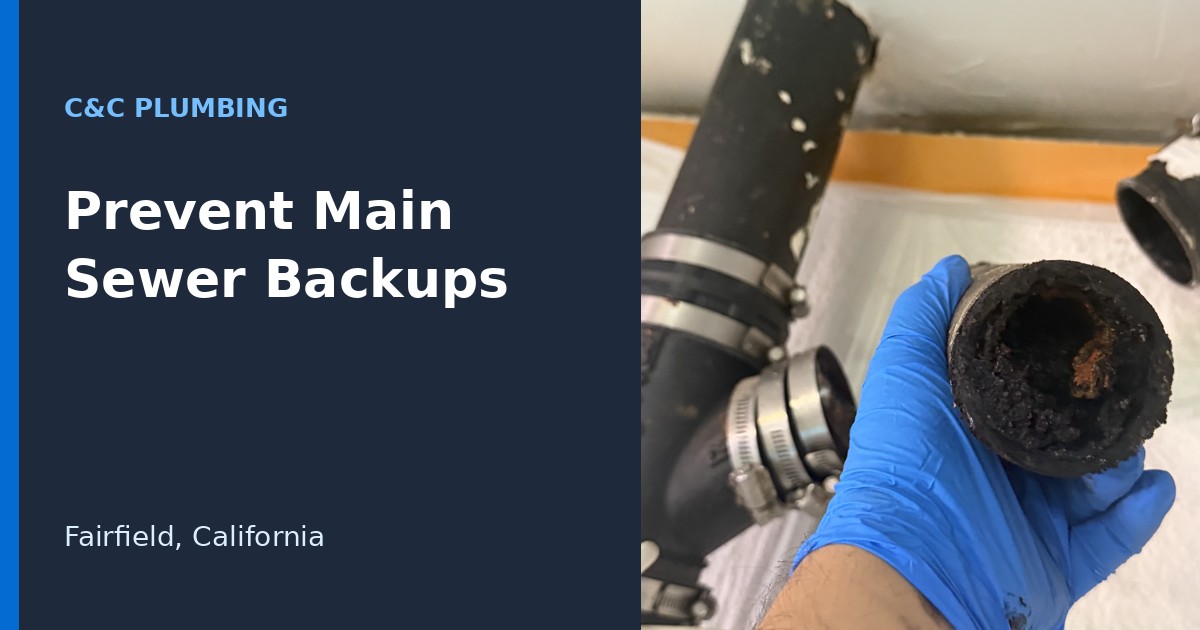
Hair-like roots slip through the tiny cracks in the pipe joints. Once inside, they thrive, growing rapidly into massive, dense root balls that act like a net, catching toilet paper and solid waste until the pipe is completely choked off.
If you have large, mature trees in your front yard, between your house and the street, your sewer line is at high risk for root intrusion.
Root growth follows moisture and oxygen, so even a tiny opening at a joint can become an entry point. Once fine roots enter, they expand into a dense mat that catches paper and solids.
Cutting the roots restores flow, but it does not seal the opening that allowed entry.
That is why a camera inspection after cleaning is essential: it reveals whether the pipe remains structurally sound, has a repairable isolated defect, or contains widespread cracking that makes replacement the better value. Landscaping decisions also matter.
Before planting a large tree, homeowners should understand the approximate route of the sewer lateral and select placement with future root spread in mind.
Removing a tree does not automatically remove roots already inside a pipe, and roots can continue causing trouble until the failed joint is repaired.
Prevention therefore combines vegetation planning, inspection, cleaning when justified, and structural correction when the pipe has lost integrity.
Proper Kitchen and Bathroom Habits
While tree roots attack from the outside, homeowners often cause blockages from the inside through improper disposal habits.
In the kitchen, the primary culprit is FOG: Fats, Oils, and Grease. When you pour warm cooking grease, bacon fat, or oil down the kitchen sink, it flows down the drain as a liquid.
However, as it travels through the cooler underground sewer pipes, it congeals and hardens into a sticky, concrete-like substance.
Over time, this grease buildup coats the interior walls of the pipe, drastically reducing its diameter and trapping other debris until the line is completely sealed shut. Always pour grease into a disposable container and throw it in the trash.
In the bathroom, the rule is simple: only human waste and standard toilet paper should ever be flushed. The biggest modern threat to sewer lines is the "flushable" wipe.
Despite the marketing claims on the packaging, these heavy-duty wipes do not break down and disintegrate in water like toilet paper does.
They remain intact, snagging on minor imperfections or small tree roots in the sewer line, quickly forming massive, impenetrable clogs. Paper towels, feminine hygiene products, and dental floss should also go straight into the trash can.
Garbage disposals do not make grease, fibrous scraps, or expanding foods safe for the sewer. A disposal grinds material into smaller pieces, but those particles can still settle and combine with grease downstream.
Rice, pasta, coffee grounds, eggshell membranes, and fibrous vegetables are common contributors to stubborn kitchen blockages. Scrape plates into the trash or compost first, use a sink strainer, and wipe greasy cookware before washing it.
In bathrooms, provide a covered waste bin so wipes and hygiene products do not enter the toilet. Teach every household member and guest the same rule: only waste and toilet paper should be flushed.
If an object falls into a toilet, stop flushing rather than trying to force it through. These habits reduce blockage risk across the private lateral and help protect the larger public sewer system serving the neighborhood.
The Value of Proactive Camera Inspections
Because the main sewer line is buried several feet underground, you cannot see a problem developing until the sewage is already backing up into your bathtub. The most effective prevention strategy is a proactive video camera inspection.
A licensed plumber can feed a high-resolution, waterproof camera down your sewer cleanout to visually inspect the entire length of the pipe. This allows the plumber to see the exact condition of the line.
They can identify early-stage root intrusion, spot areas where grease is beginning to build up, and check for structural issues like sagging (bellies) or cracks in the pipe wall.
If the camera reveals a developing blockage, the plumber can use high-pressure hydro-jetting to scour the pipe walls clean and slice through the roots, completely restoring the pipe's capacity before a backup ever occurs.
Camera footage is most useful when the pipe has been cleaned enough for the lens to see the walls.
Pushing a camera through standing water or dense debris can identify the obstruction's location but cannot always reveal the pipe condition underneath.
A complete evaluation records the route, approximate depth, joint condition, root entry points, cracks, offsets, and low sections where water pools. The technician can also locate defects from the surface, which makes any later excavation more precise.
Homebuyers in older Fairfield neighborhoods should request sewer evaluation before closing when the lateral's age and condition are unknown.
A clean inspection does not guarantee the pipe will never fail, but it establishes a baseline and exposes existing structural problems before they become emergency backups.
Save the video and written findings so future maintenance decisions can be compared against documented conditions.
A Practical Sewer Maintenance Plan
A prevention plan should match the pipe material, property age, landscaping, and history of previous backups. A newer plastic sewer with no large trees nearby needs less intervention than an older clay line crossing beneath mature landscaping.
Start by locating the exterior cleanout and keeping it accessible. Record every slow-drain or backup event, including which fixtures were involved and how the problem was cleared.
Repeated blockages in the same interval signal a persistent condition rather than bad luck. For high-risk lines, schedule a camera inspection before the season when problems normally occur and after major landscaping or construction.
Use the footage to decide whether cleaning, root management, spot repair, or full replacement is justified. Maintenance should be evidence-based: routine chemical treatment without inspection can damage components or delay a structural repair.
A documented plan gives Fairfield homeowners predictable maintenance instead of emergency cleanup.
Hydro-jetting and mechanical cabling serve different purposes. Cabling can break through a localized obstruction and restore immediate flow.
Hydro-jetting uses controlled high-pressure water to remove grease, scale, and root material from the pipe walls, but the pipe must be stable enough for the method. Neither approach repairs a collapsed line, separated joint, or severe belly.
A plumber should select the cleaning method after considering pipe material, condition, blockage type, and access. Maintenance frequency should also be driven by evidence.
A line with recurring root growth may need planned service while the owner prepares for repair; a healthy modern line may need only good disposal habits and occasional inspection. The goal is not to sell repeated cleaning.
It is to prevent backups while directing the homeowner toward a permanent fix when cleaning can no longer solve the underlying defect.
Explore main sewer line repair and replacement and drain cleaning in Fairfield.
Cost Information
Preventative maintenance is incredibly cost-effective compared to emergency repair. A routine camera inspection and preventative hydro-jetting session is a minor, planned expense.
Conversely, if you ignore the warning signs (like gurgling toilets and slow drains) until the pipe completely backs up or collapses, you will be facing emergency plumbing rates to clear the blockage.
If the roots have grown so large that they have shattered the clay pipe, the line cannot be cleaned; it must be excavated and replaced, which is a major construction project costing thousands of dollars.
Furthermore, you will also have to pay a specialized restoration company to extract the raw sewage from your home, tear out contaminated drywall and flooring, and sanitize the affected areas.
When to Call a Professional
If you notice that multiple drains in your home are running slowly, or if you hear a distinct gurgling sound coming from your toilet when you run the washing machine, a main line blockage is already forming.
Do not attempt to clear a main sewer line yourself with rented equipment or chemical drain cleaners; you will likely push the blockage deeper or damage the pipes.
Call a licensed plumber immediately to diagnose the issue with a camera and clear it safely.
Need a Plumber in Fairfield? C&C Plumbing Is Ready to Help
Don't wait for raw sewage to flood your home. Call us at (707) 434-1355 or contact us today to schedule a sewer line camera inspection and preventative hydro-jetting in Fairfield and surrounding areas.